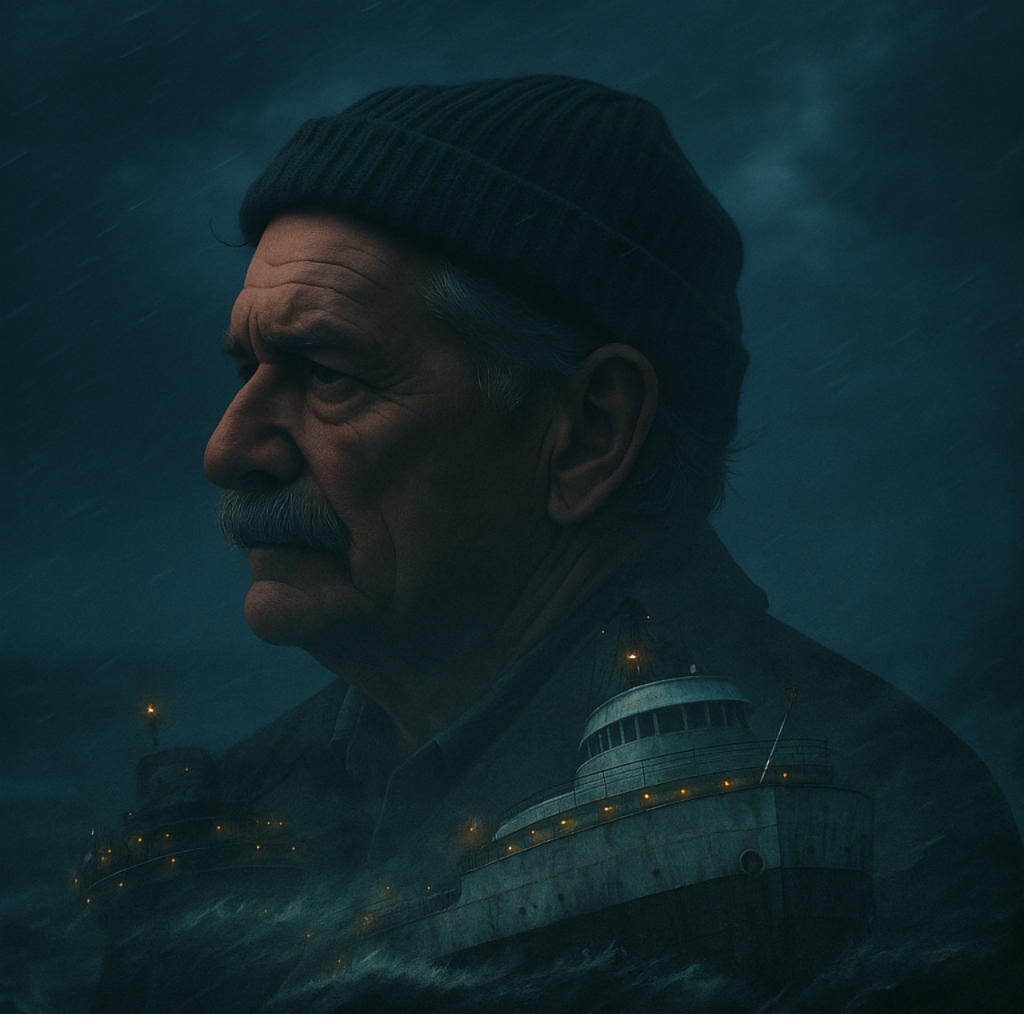

Remembering the Edmund Fitzgerald
Filed by Captain Rowan Thorne, Keeper of Navigational Memory
November 10, 2025 — Rawley Point Chapter House, Lake Michigan Coast
Fifty years tonight. The wind off Michigan has that same cut, east-by-northeast, snow that hovers more than falls. You can taste iron in the air when the barometer starts to drop. Every November I feel it coming, even this far south of Superior. The lakes share their weather like old conspirators. The big one breathes out, and the others shudder.
The Edmund Fitzgerald went under at 7:10 p.m., November 10, 1975.
Twenty-nine men aboard. None ashore.
Superior rolled over and went still again, as if nothing had happened. That’s her way.
I was here, along this same shoreline, hearing reports scatter through the radio like gravel. At first disbelief, then the silence that tells its own story. You could feel it up and down the Great Lakes, a kind of held breath in the harbors. The band went quiet except for wind. We all knew before the confirmation. You can tell by the quiet when a ship’s gone under.
People call it mystery, but there’s no mystery to heavy seas. Superior doesn’t take kindly to pride, and she doesn’t bargain. The Fitzgerald was strong, her skipper steady, but the lake found the weak seam, the bad angle, the one breath too late. I’ve spent five decades replaying the what-ifs like film stutters: what if they’d hugged the Canadian coast, what if they’d reduced speed earlier, what if they’d made Whitefish Light? The truth is simpler and crueler. Sometimes the water wins.
Even now, part of me resists the word tragedy. To the shorebound, it’s spectacle. To those who’ve stood on a heaving deck with steel flexing underfoot, it’s arithmetic, wind speed, hull stress, fatigue, and faith. Every sailor knows the sum, and every voyage is a wager. We keep going because stopping isn’t in us. That’s the sin and the sanctity both.
When the news settled, I remember standing on the pier at Two Rivers, coffee gone cold in my hand, staring east at water that had turned glass-smooth again, erasing its own evidence. Anger had nowhere to go; at the forecasts, at the builders, at God. Mostly at myself, for being alive when better men weren’t. Survivor’s arithmetic again: the water spared me, and I never learned why.
Tonight, in the Lecture Hall, we’ve set the old ship’s-bell replica by the window. The storm glass trembles each time it rings. Twenty-nine tolls, steady as heartbeat. I don’t close my eyes. I watch the flame gutter in the lanterns. I listen to the echo crawl along the stone. It’s the same sound they would have heard in their last minute, iron striking air, air swallowed by sea.
I tell the apprentices what I’ve come to believe: the Fitzgerald isn’t a ghost story. She’s a teacher. Her lesson isn’t sorrow but scale. The Great Lakes are not tame. They are vast, cold systems of consequence. They take as they give. The men who work them understand this, and still we go. We always go.
So tonight I’ll walk down to the beach after the last bell. I’ll stand where the surf folds over and look north, toward that unseen horizon. Somewhere beyond it, five hundred and thirty feet down, lies the last line of a logbook none of us finished. I’ll whisper their names, not as elegy but as reminder. The lake keeps the rest.
— Custodes Litoris. Memoria Maris.