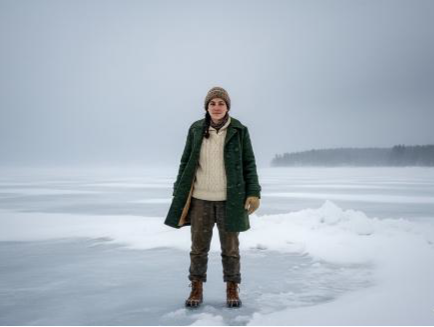

On Sisu, and Why Winter Does Not Care Who Is Watching
By Ingrid Vahtera, Keeper of Marginal Notes and Seasonal Continuity
Sisu is often spoken of as if it were a personality trait. This is convenient for people who like their concepts portable and flattering. It is also incorrect.
The word comes from Finnish, but not from poetry, and not from folklore in the decorative sense. Its root is sisus, meaning interior, entrails, the part of the body that stays when surface strength is exhausted. Historically, it was not a compliment. It described a state you entered because you had already run out of preferable options.
In Finland, sisu developed under conditions that did not reward improvisation or spectacle. The land was poor. The growing season was short. Winter arrived early and stayed without apology. You did not negotiate with it. You prepared, or you learned the cost of not preparing.
Sisu was not optimism. It was not courage in the theatrical sense. It was the capacity to continue after the moment when a reasonable person would stop expecting conditions to improve. It assumed no rescue and offered no consolation. It was a method for enduring reality as it presented itself, not as it was wished to be.
This matters, because when words are removed from their conditions, they become ornamental. Sisu is not ornamental.
In Finnish history, it appears most clearly in agriculture, in subsistence fishing, in border defense, in the long management of scarcity. It was not invoked during moments of triumph, but afterward, when the work still had to be done. The crops harvested. The road cleared. The house rebuilt without commentary.
It is telling that sisu has no precise English equivalent. English tends to separate mental resolve from physical endurance, and then elevate both into performance. Sisu does neither. It binds resolve to action and strips both of drama. You do what must be done because stopping is not an improvement.
This is why sisu cannot be summoned on demand. It does not respond to slogans. It arrives only after comfort has left.
Great Lakes winter operates in much the same way.
People unfamiliar with these lakes often misunderstand their winter character. They assume it is simply cold water behaving badly. In reality, it is a prolonged reordering of the shoreline. Ice does not decorate the lake. It alters its structure. Wind pushes frozen water into ridges that resemble geological features more than weather effects. Familiar paths disappear. Sounds change. Distances distort.
Winter removes softness.
This is not cruelty. It is clarification.
The Great Lakes are inland seas that behave as if they have memory. They hold heat longer than the land and release it slowly, which confuses seasonal expectations. They freeze late and break unpredictably. They produce conditions that look stable until they are not. This makes winter here different from colder places with simpler rules.
You cannot rely on temperature alone. You must watch wind, pressure, accumulation, thaw, refreeze. You must accept that yesterday’s map is no longer accurate.
This is where sisu becomes relevant, not as inspiration, but as discipline.
The Order continues its winter fieldwork not because winter is symbolic, but because it is instructive. Shorelines in summer are generous. They allow for casual observation. Winter shorelines demand intention. You dress incorrectly once and you learn. You move carelessly once and you remember it longer than you would like.
Field notes taken in winter are not more poetic. They are more precise. There is less to see and more to notice.
The practice of sisu aligns with this. It does not ask whether the effort is rewarding. It asks whether the effort is required. These are not the same question.
Ingrid Vahtera did not grow up hearing speeches about sisu. She heard it mentioned in passing, usually when something had gone wrong and still needed attention. A fence collapsed under snow. A boat motor failed late in the season. Someone worked through the night and returned to the table without explanation.
No one praised this behavior. It was expected.
This expectation traveled quietly. It crossed the Atlantic with people who did not consider themselves heroic. It settled in places where land and water created similar pressures. Northern Minnesota. The Upper Peninsula. Wisconsin’s lakeshore towns. Not because they shared language, but because they shared conditions.
Great Lakes winter produces the same requirement: continue without spectacle.
There is a temptation to frame winter work as a test of toughness. This misunderstands both the season and the work. Toughness implies resistance. Winter does not respond to resistance. It responds to adaptation.
Sisu is not resistance. It is alignment.
When the Order conducts a shore walk in January, there is no expectation of discovery. The goal is not insight. It is presence. To mark what exists now, knowing it will not exist in this form again. To continue a record that does not pause because conditions are inconvenient.
This continuity is often mistaken for stubbornness. It is not. It is respect for process.
Sisu is sometimes translated as perseverance, but perseverance suggests a fixed endpoint. Finish the race. Survive the storm. Reach the spring. Sisu does not assume an endpoint worth naming. It concerns itself with the current task and the next one after that.
This distinction matters in winter, because winter does not offer a clear finish. It loosens its grip slowly. It tests patience more than strength. It punishes anticipation.
Those who wait for winter to be over often miss what it reveals. Systems that depend on excess fail first. Tools that work only under ideal conditions are exposed. Habits that rely on comfort collapse.
The Great Lakes in winter are excellent auditors.
They do not care about intention. They register outcome.
Sisu is how you continue when the audit is unflattering.
This is why the Order does not romanticize winter. Romance introduces expectation. Winter will not meet it. Instead, the Order approaches winter the way Finnish farmers approached frozen ground: as a reality to be worked with carefully, without complaint and without urgency.
Records are kept. Adjustments are made. The work proceeds.
There is a particular quiet that arrives on the lakes in late winter. Not the silence of absence, but of reduced excess. Fewer people. Fewer movements. Fewer assumptions. This quiet sharpens attention. It makes small changes visible.
Sisu thrives in this quiet because it does not require reinforcement. It does not need to be witnessed to be effective.
This is where modern interpretations often fail. They turn sisu into a story about overcoming. But sisu does not overcome winter. Winter remains. Sisu simply refuses to stop operating because of it.
The Order understands this instinctively, though it rarely names it. The ledgers continue because stopping would introduce a gap that cannot be recovered. The shore walks continue because absence is also a form of data, but only if it is documented deliberately.
In Finland, sisu was never about domination of environment. It was about coexistence under constraint. The same applies here.
Lake Michigan does not need to be impressed. It needs to be observed accurately.
By late March, the ice begins to weaken. This is the most dangerous period. Confidence returns too early. The lake looks negotiable again. Many accidents happen then, not in deep winter, but at the threshold of relief.
Sisu does not relax at thresholds.
It maintains discipline until conditions have actually changed, not until they appear to be changing.
This, more than endurance, is its defining feature.
When spring finally arrives, it does so unevenly. One section of shore clears while another remains locked. Meltwater reshapes channels. The ledger reflects this complexity. There is no declaration of season. Only updated entries.
Sisu ends the same way it began: without announcement.
It does not claim credit when the work becomes easier. It steps back and lets normal effort resume.
This is why sisu resists modern framing. It does not fit neatly into narratives of self-improvement or triumph. It is older than those narratives and uninterested in them.
It belongs to places where winter lasts long enough to teach restraint.
The Great Lakes are such a place.
Those who live and work here inherit this discipline whether they name it or not. Those who join the Order adopt it consciously. Either way, the expectation is the same.
Continue. Record accurately. Adjust when required. Do not embellish difficulty. Do not rush relief.
Winter will end when it ends.
Until then, the work remains.
And so do we.